



ESSENTIAL NOTES ON OSTREATUS
Like other fungi of nutritional interest, the oyster mushroom is a natural source of dietary fibre and polysaccharides. Pink oyster mushrooms and other mushrooms of the Pleurotus genus have been prized for centuries for their nutritional value and delicious flavour.

DOCUMENTED APPLICATIONS AND USES OF PLEUROTUS
Mushrooms are recognised as a nutrient-dense food, and concentrated extracts provide a standardized way to complement daily nutrition in powder, capsule, or liquid form.
Oysters mushroom products
-

 TOP SELLERSHasta - 10 %
HIFAS-Microbiota (Lion’s Mane, Oyster, Reishi, Shiitake) capsules
GUT COMFORT SUPPORT
From 42,50 €Unit price /Unavailable -


Bio Defense (Oyster, King Oyster, Lion’s Mane, Reishi and Shiitake powder) capsules
NATURAL IMMUNE DEFENCE
31,90 €Unit price /Unavailable


OSTERA MUSHROOM CULTIVATION
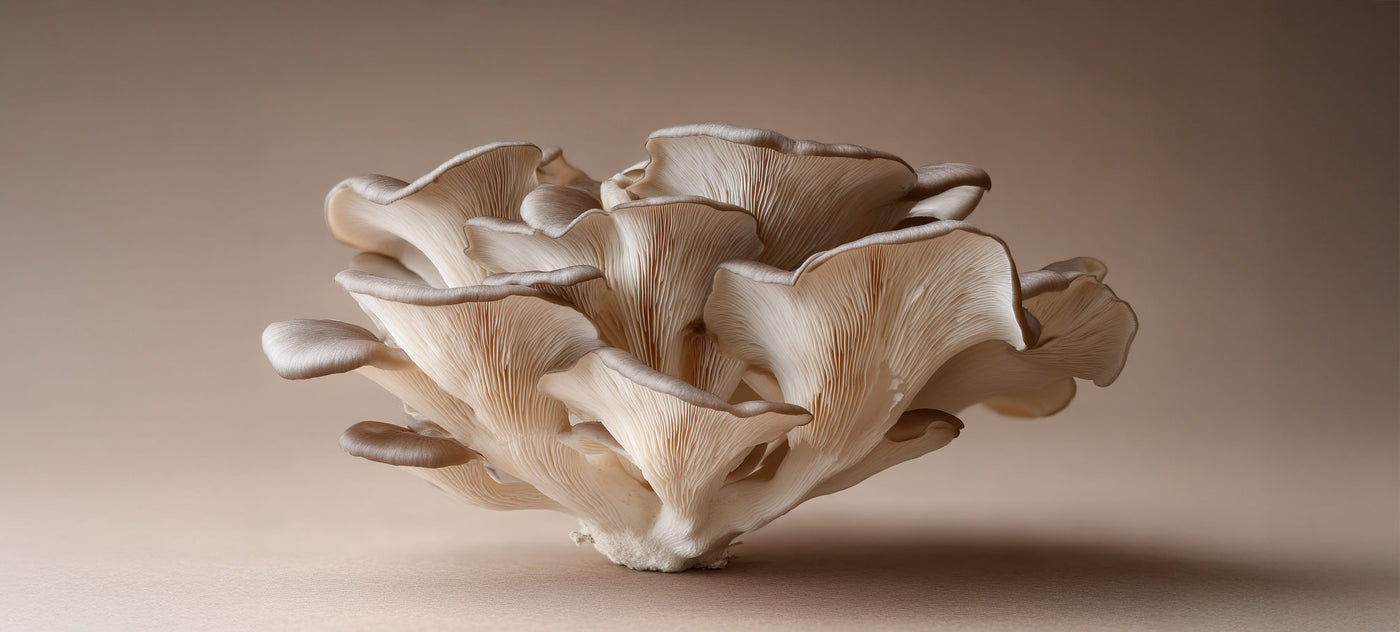
Pleurotus ostreatus is the most widely cultivated species due to its ease of growing. It features several varieties that differ in both morphology and flavour. As one of the easiest fungi to cultivate, large quantities are produced throughout Europe. It can be grown using poplar wood or substrate bags containing pelletised straw.
Featured Biomolecules
Like P. eryngii, oyster mushrooms contain polysaccharides and other bioactive substances:

Do you want to know more?
Habitat and distribution
Habitat and distribution
This species is extended throughout the world, being in very different environments ranging from cold boreal areas to tropical climates, giving rise to various varieties of this fungus.
Mycological notes
Mycological notes
It is one of the most widely cultivated species. It belongs to the order Agaricales, family Pleurotaceae, and genus Pleurotus, which includes several species that are difficult to distinguish from one another, along with various subspecies, varieties, and cultivated strains that grow as saprophytes or weak parasites on deciduous trees and other plants. The fruiting body of P. ostreatus has thick, firm, whitish flesh with a pleasant aroma and flavour. Regardless of the cultivation method chosen, the oyster mushroom grows in dense clusters, branching from a short central stem into individual shell-shaped caps. Size is variable, ranging from 4 cm to 25 cm. Cap colour varies, with grey and brown tones being the most common. When the mushroom reaches optimal maturity, the edges roll inward; as it matures further, the caps open to release spores. The gills are compact, well-defined, and white, darkening as the mushroom ages.
The culture in bioreactors
The culture in bioreactors
Quality, Purity, and Consistency in Our Production Systems
Our commitment to excellence is reflected in our strict quality assurance standards, ensuring purity and consistent quality across our products.
R&D and Studies with Seta de Ostra
R&D and Studies with Seta de Ostra
- Hifas da Terra conducts studies to improve mushroom production processes and optimize the development of new biotechnology-based ingredients.
- Hifas da Terra maintains an extensive fungal library (Hifas Mycological Culture Collection), utilizing its own strains isolated from the Iberian Peninsula, which it selects specifically for product formulation.
- Hifas da Terra carries out multiple research studies in collaboration with universities and independent research centers.
Curiosities
Curiosities
- This species grows in a distinctive way: although each cap has a distinct stem, they form tight clusters that resemble a beautiful edible bouquet.